4 Surprising Ways Van Gogh Trains your Child’s Brain
Did you know that the artwork of Van Gogh can help children to notice details, observe, focus and notice patterns? Let’s explore the fascinating ways Van Gogh can help train your child’s brain.

Why attention is harder than ever to cultivate
More than ever before, children’s attention is constantly being pulled in different directions. Fast-paced shows, quick-cut videos, bright animations, gamified learning platforms and even shorter, simplified books all train the brain to move quickly from one thing to the next. Over time, this can make it more difficult for children to slow down, notice details, and stay focused on a single subject.
This is where picture study becomes especially valuable. When a child is given the opportunity to look carefully at a single painting, they are practicing a very different kind of attention. They learn to slow down, observe closely, and remember what they have seen. This kind of training strengthens focus, supports deeper learning, and helps develop the habit of truly paying attention; something that benefits every area of their education. This article will take a look at why Van Gogh is an especially effective artist to develop and support your child’s brain.
But first, let’s ask: What is picture study?
If you are new to the idea of picture study, it is a simple and highly effective method drawn from the Charlotte Mason education method. A typical lesson involves choosing one painting and allowing your child a few minutes to study it carefully. After looking, you remove the image and ask them to describe what they remember. Over the course of several weeks, you study several works by the same artist, gradually becoming familiar with their style, subjects, and techniques. There is no need for lectures or over-explanation. Instead, the focus is on careful observation, attention, and recall, skills that strengthen naturally through consistent, short lessons that typically take around 10–20 minutes once a week.
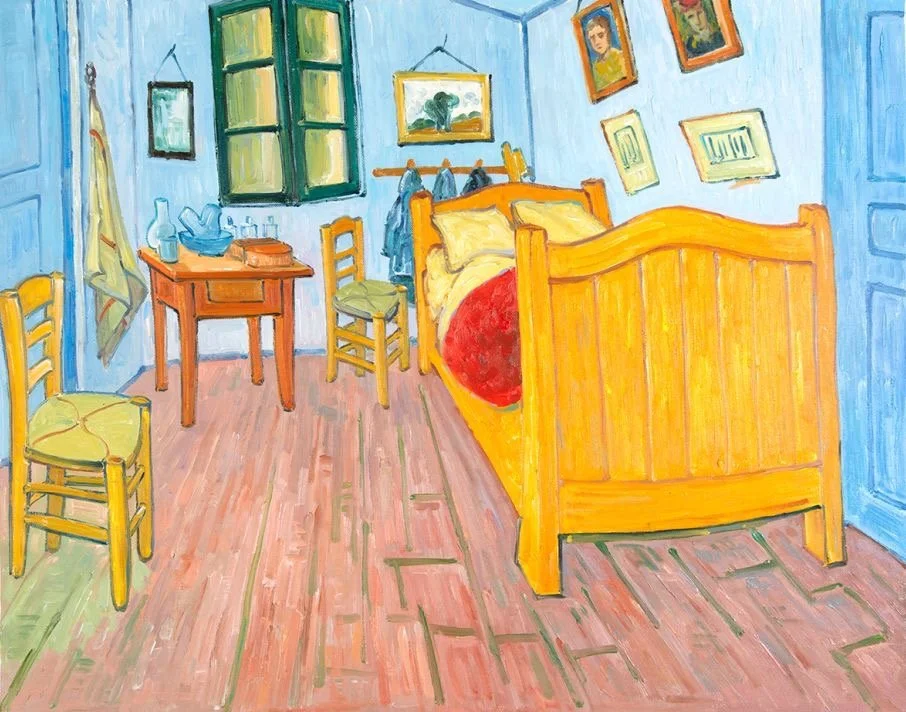
How Van Gogh trains your child’s brain
Van Gogh is an especially effective artist to begin with because his work is visually clear, emotionally engaging, and full of recognizable patterns. Children are naturally drawn to his paintings, which makes him an ideal starting point for building these skills.
When you place a painting by Vincent van Gogh in front of your child and give them time to look carefully, you are not just exposing them to great art. You are actively strengthening skills that support attention, memory, language, and even mathematical thinking. What is especially encouraging is that this happens naturally, without worksheets or over-explanation.
Here are four specific ways Van Gogh’s work helps train your child’s brain, and what you may notice over time as you practice picture study together.
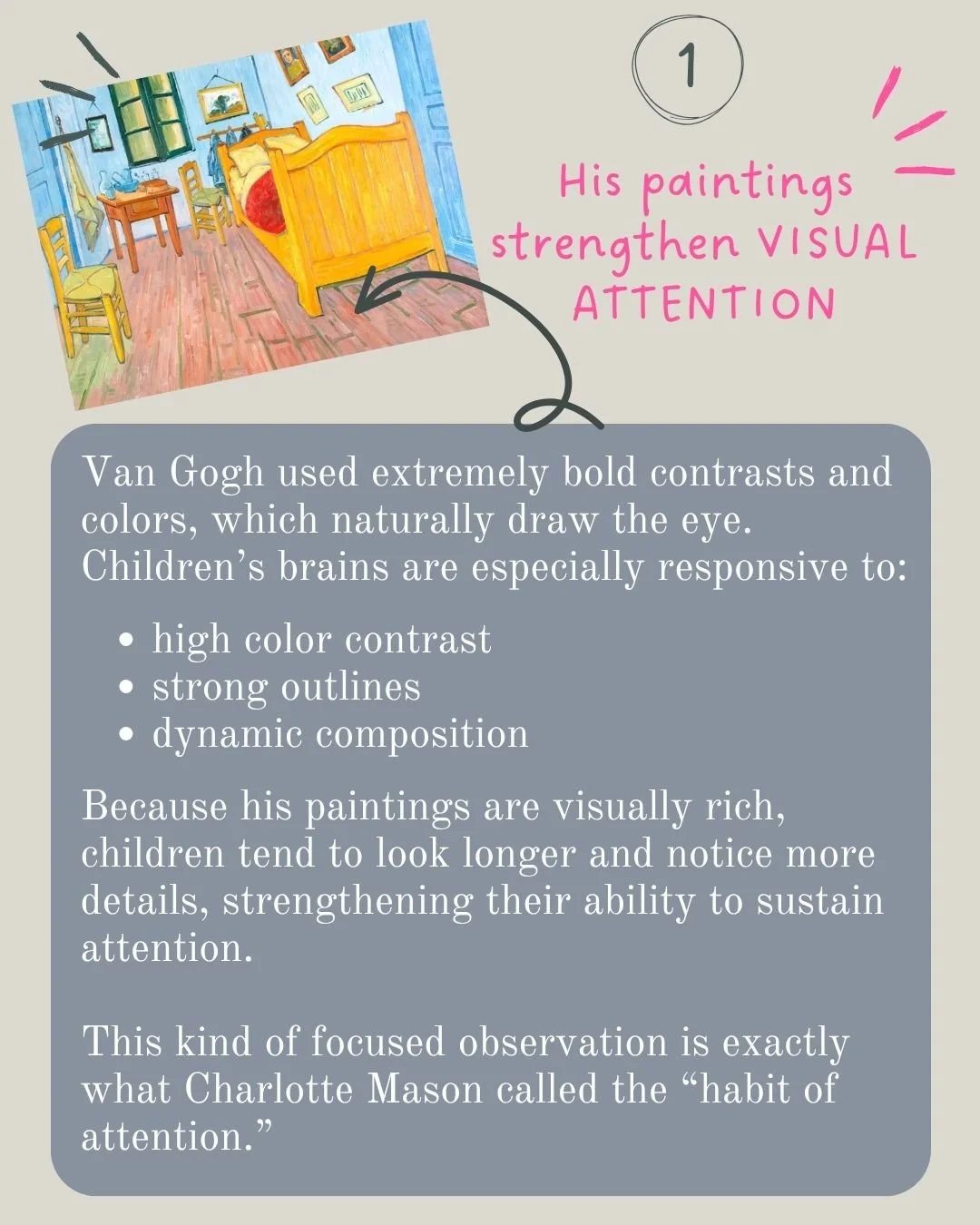
1. Strengthens Visual Attention
Van Gogh’s paintings are visually engaging, which naturally encourages children to look longer and more carefully. The strong contrasts, bold color choices, and clear forms give the eye plenty to focus on, which helps children practice sustained attention.
You may notice that your child begins to spend more time observing a single image and starts pointing out details they would have previously missed, such as small objects in the background or subtle changes in color. This type of focused looking strengthens attention span over time, which directly supports reading comprehension, writing, and other academic tasks that require concentration.
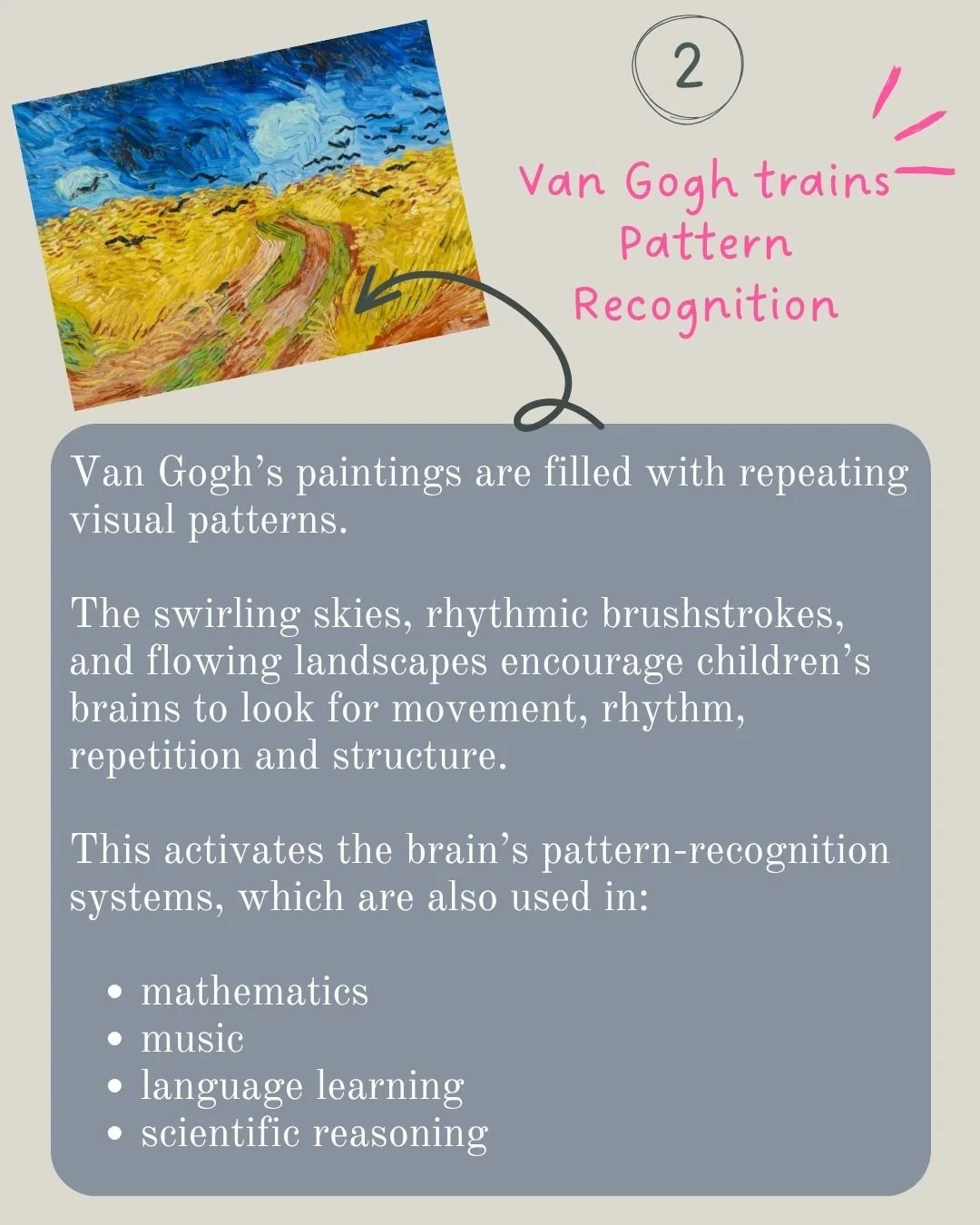
2. Trains Pattern Recognition
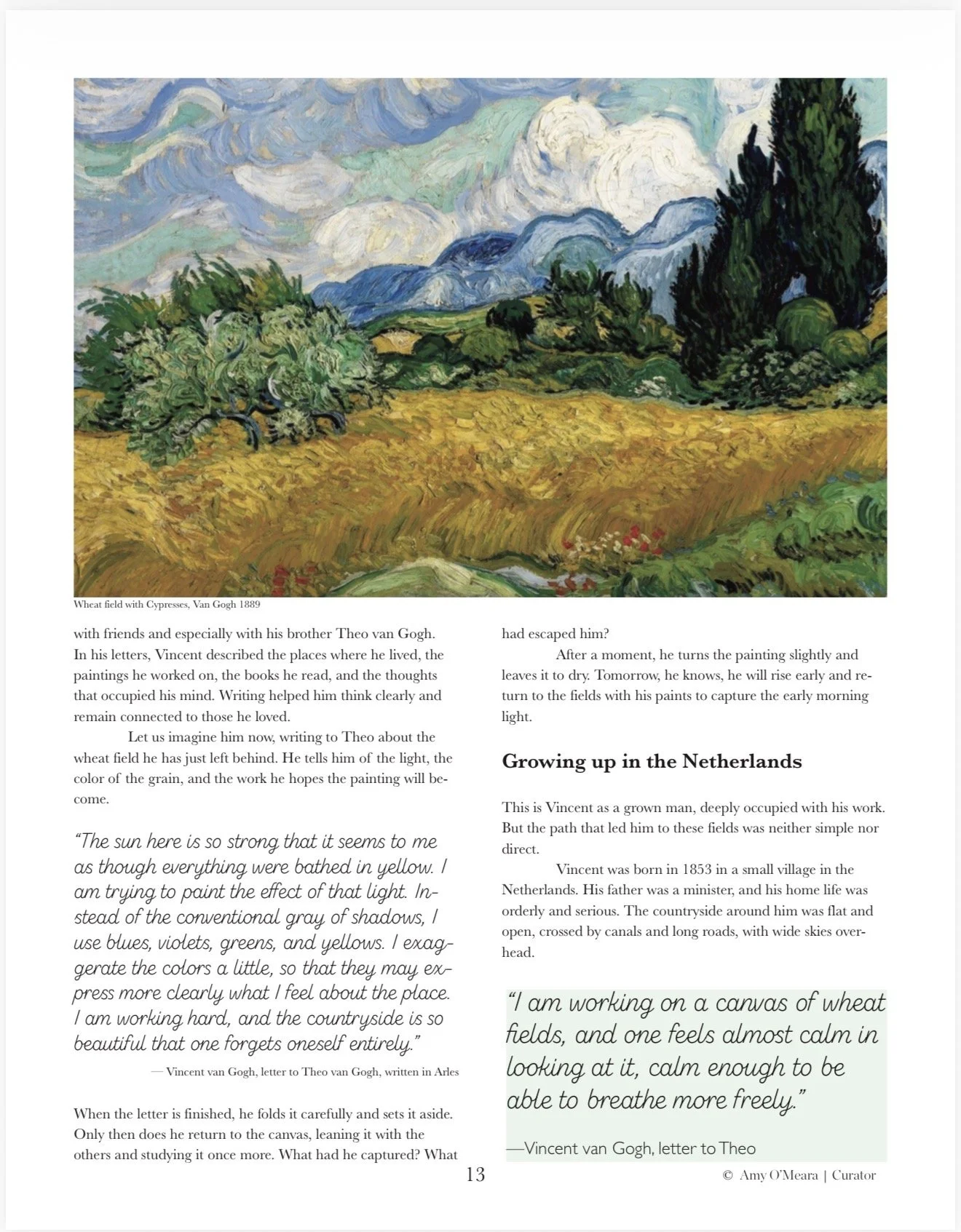
Van Gogh’s work is filled with visible patterns, from the repeated brushstrokes in the sky to the flowing lines in landscapes and trees. These patterns are easy for children to notice and naturally invite them to look for repetition and structure.
Children often begin tracing these patterns with their eyes or describing them out loud, noticing how certain shapes and movements repeat across the painting. This kind of pattern recognition is foundational for subjects like math and reading, where children need to identify sequences, structures, and relationships. Regular exposure to artwork like this helps strengthen those skills in a way that feels engaging rather than academic.
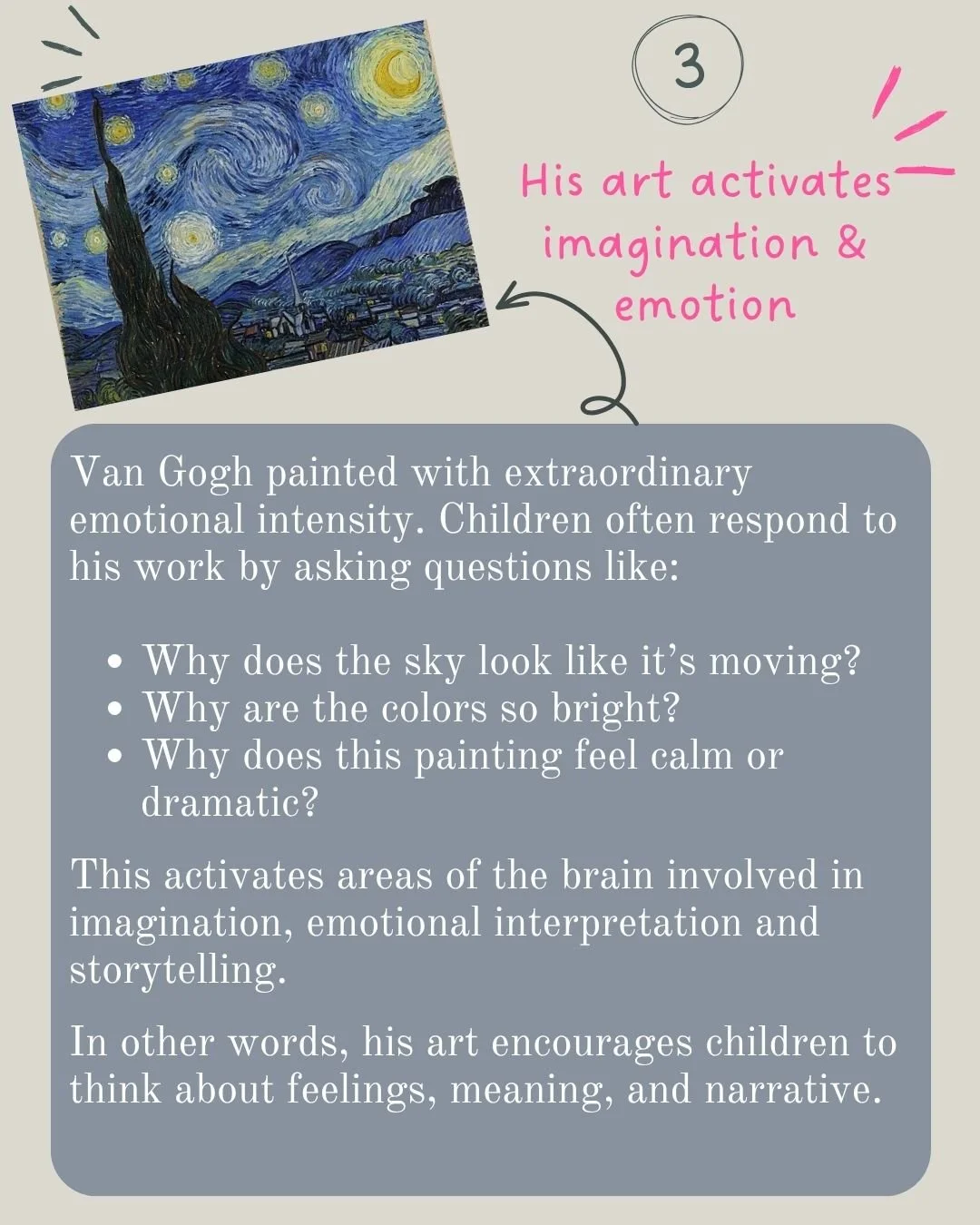
3. Activates Imagination and Emotional Understanding
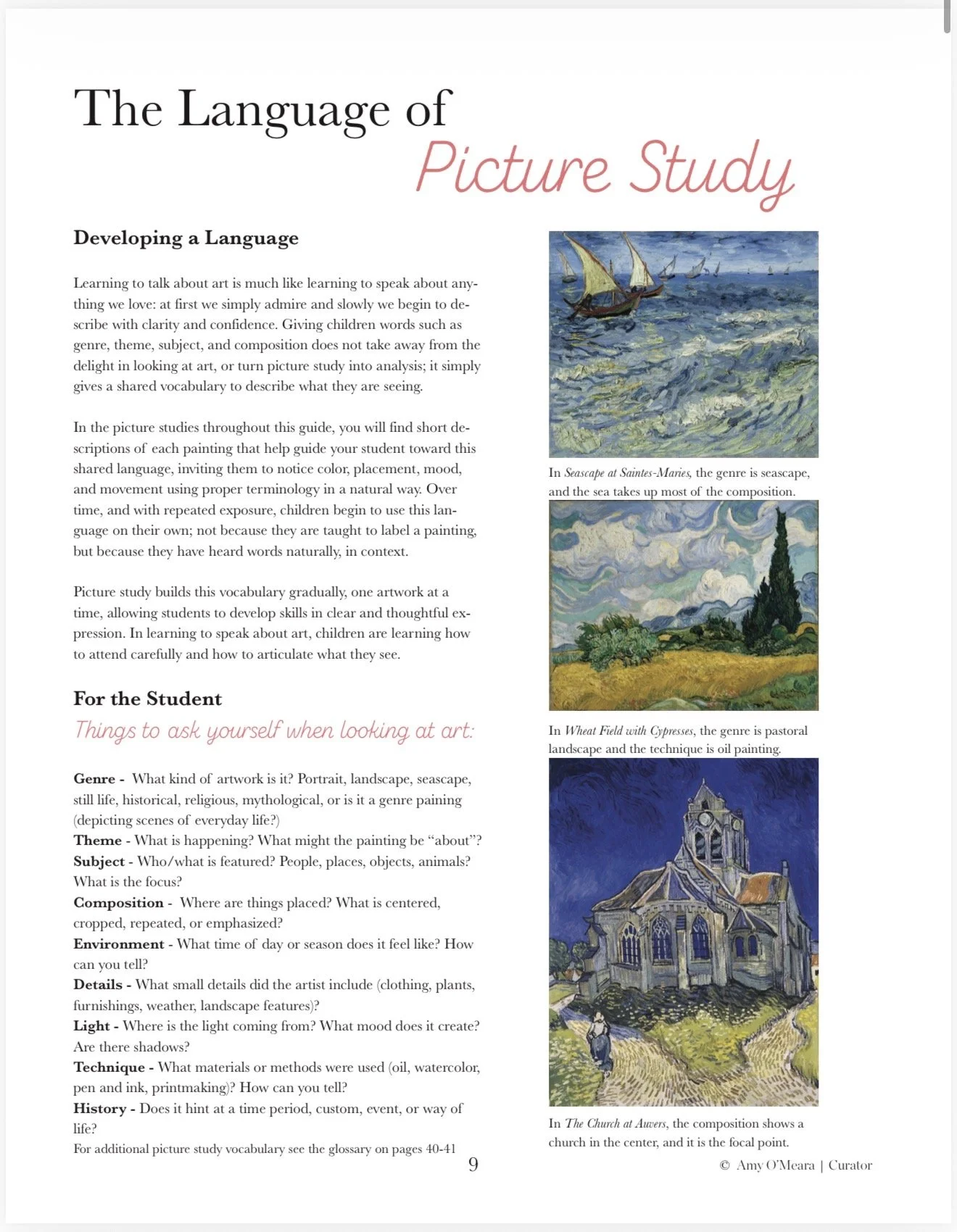
Van Gogh’s use of color and movement often prompts children to ask thoughtful questions and share their interpretations. You may hear questions like, “Why does the sky look like it’s moving?” or “Why do these colors feel make me feel happy?”
These kinds of responses are valuable because they encourage children to connect what they see with how they think and feel. Research in child development shows that discussing emotions and interpretations helps build language skills, critical thinking, and emotional intelligence. Over time, children become more confident in expressing their ideas and explaining their reasoning, which supports both academic and social development.
4. Increases Visual Memory
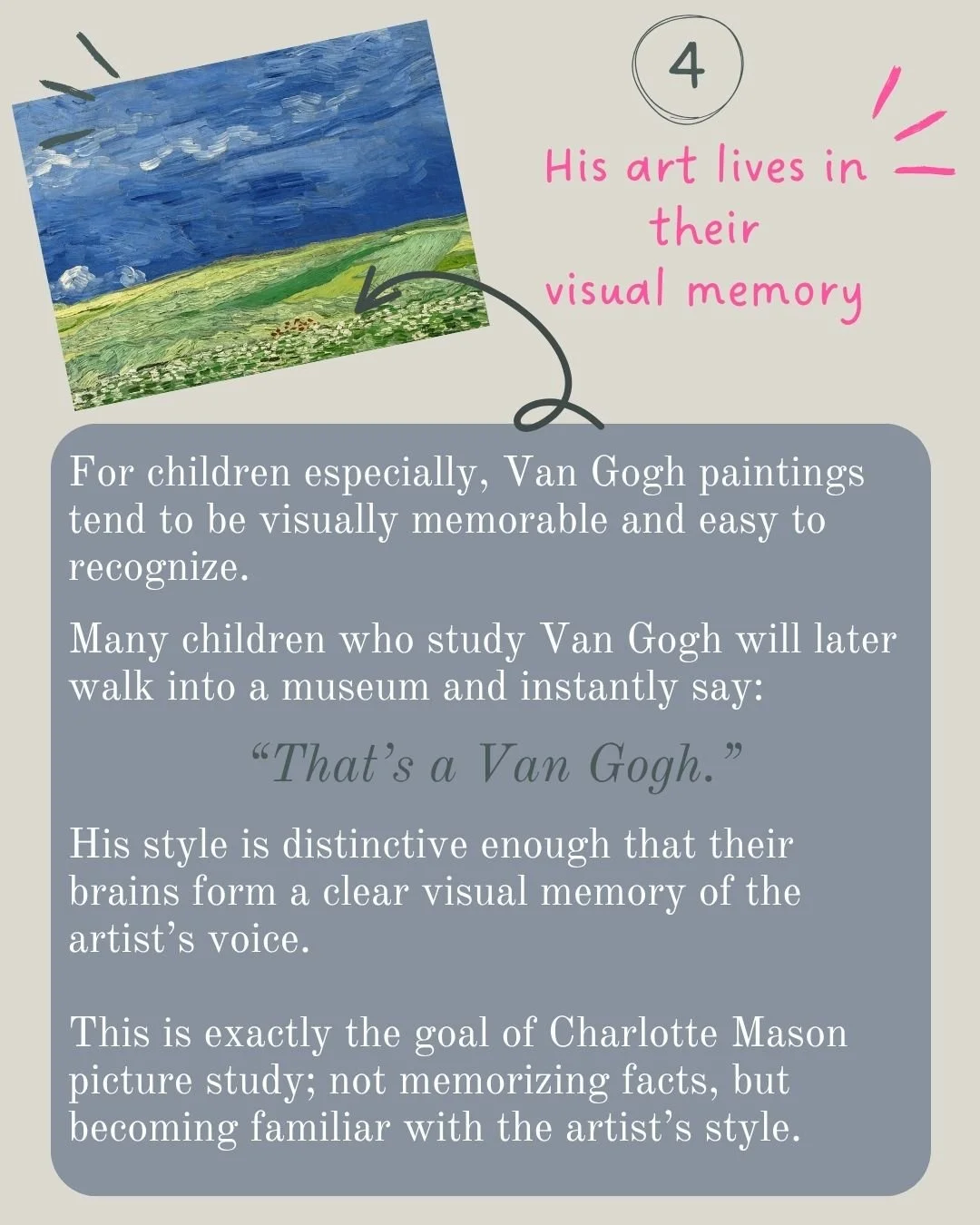
Van Gogh’s distinct style makes his paintings especially memorable. The bold colors, unique brushwork, and recognizable compositions help children store visual information more effectively.
You may notice that after studying a few paintings, your child can easily recognize his work in books or museums and identify it by name. This is an example of strong visual memory, which plays an important role in reading, writing, and overall learning. When children practice remembering and recalling visual details, they are building skills that transfer across many areas of education.
Why a regular picture study practice matters
The benefits of starting a regular practice of picture study
Educational research consistently shows that skills like sustained attention, pattern recognition, and memory are strengthened through repeated observation and recall. Picture study builds these skills in a way that feels natural, engaging, and enjoyable for children.
There is a reason so many Charlotte Mason educators return to picture study again and again: it is simple to implement, deeply engaging for children, and surprisingly powerful in terms of cognitive development. If you are looking for a simple way to build your child’s attention, observation, and memory, picture study is one of the most effective places to begin.
You may be reading this and thinking: This sounds wonderful… but will I actually do it?
The encouraging part is that picture study is one of the easiest subjects to implement. There is no prep, no materials beyond a single image, and no pressure to “teach” in the traditional sense. You are simply guiding children to look, notice, and remember. Once it becomes part of your weekly rhythm, it often becomes one of the lessons your students look forward to the most.
What a Van Gogh picture study looks like
A typical picture study might look like this: you gather your children at the table, place a Van Gogh painting in front of them, and give them a minute or two to look carefully. Then you turn it over and ask, “What do you remember?” You may hear them describe the swirling sky, the bright yellow flowers, or small details you did not even notice yourself. In a classroom setting, you can even put the image on your classroom screen, and zoom in on various areas as you observe and discuss the painting with your students. Picture study can be practiced with children as young as kindergarten, all the way through 12th grade. Over time, you will see their observations become more detailed, more structured, and more confident.
Discover our open-and-go weekly picture study lessons
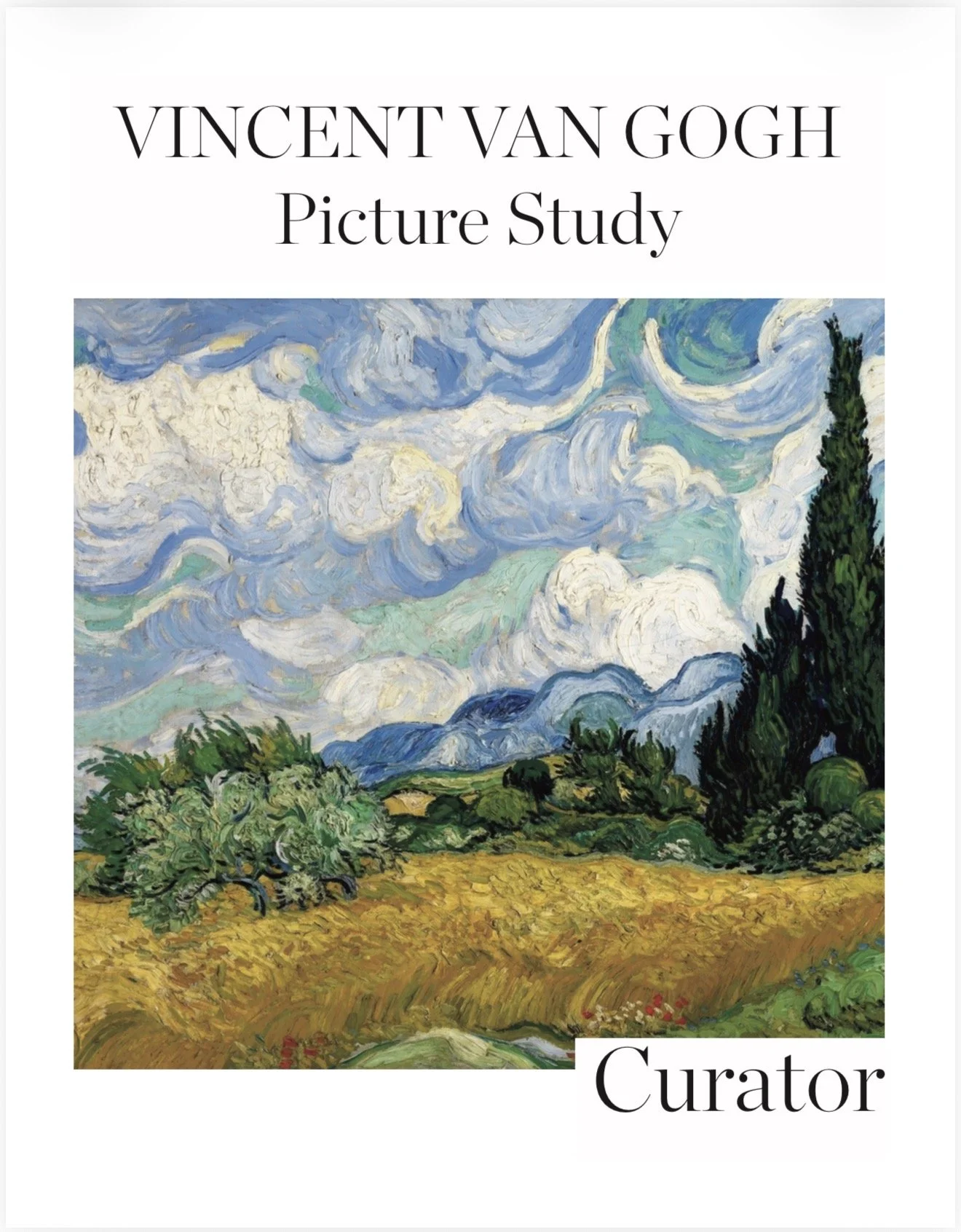
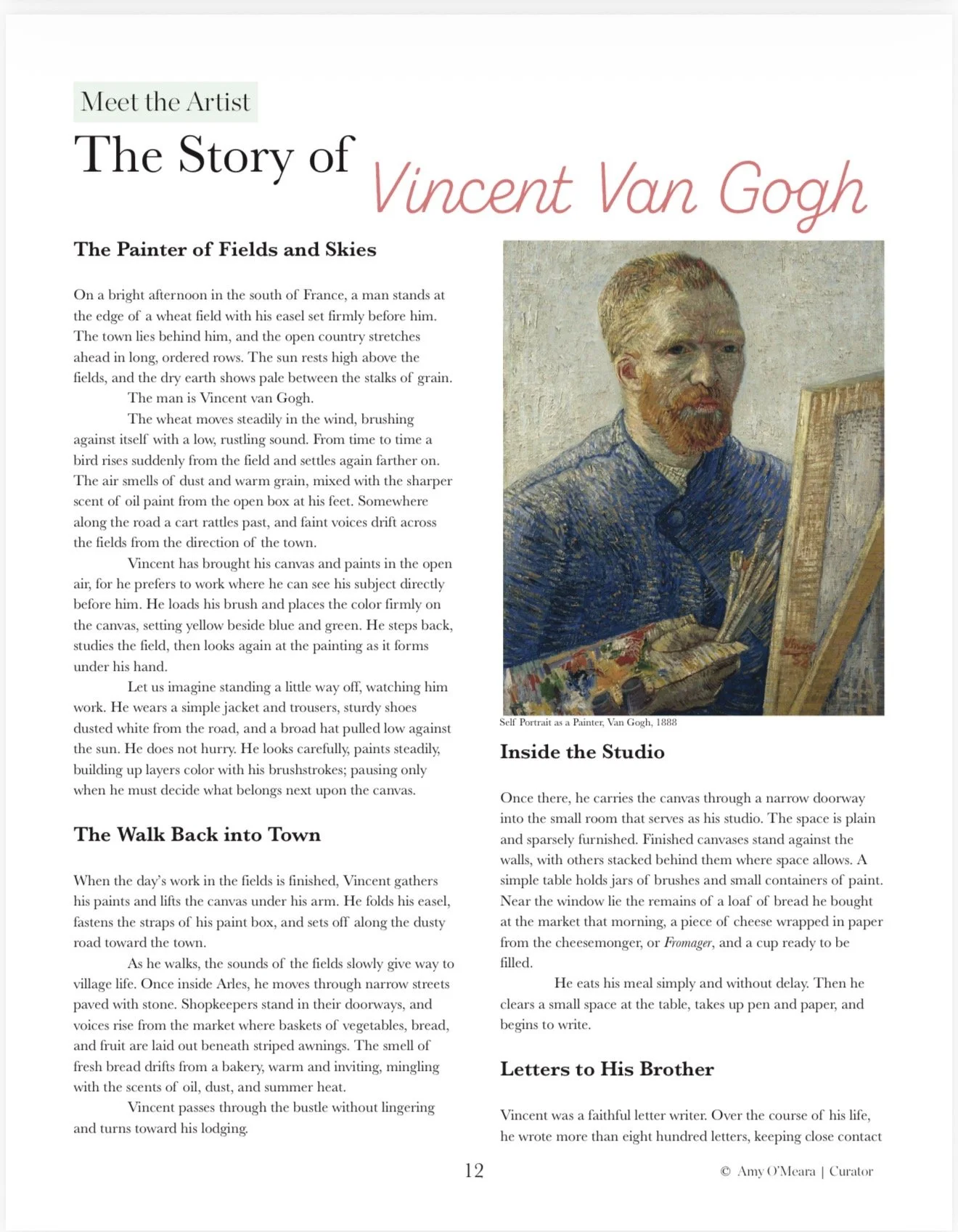
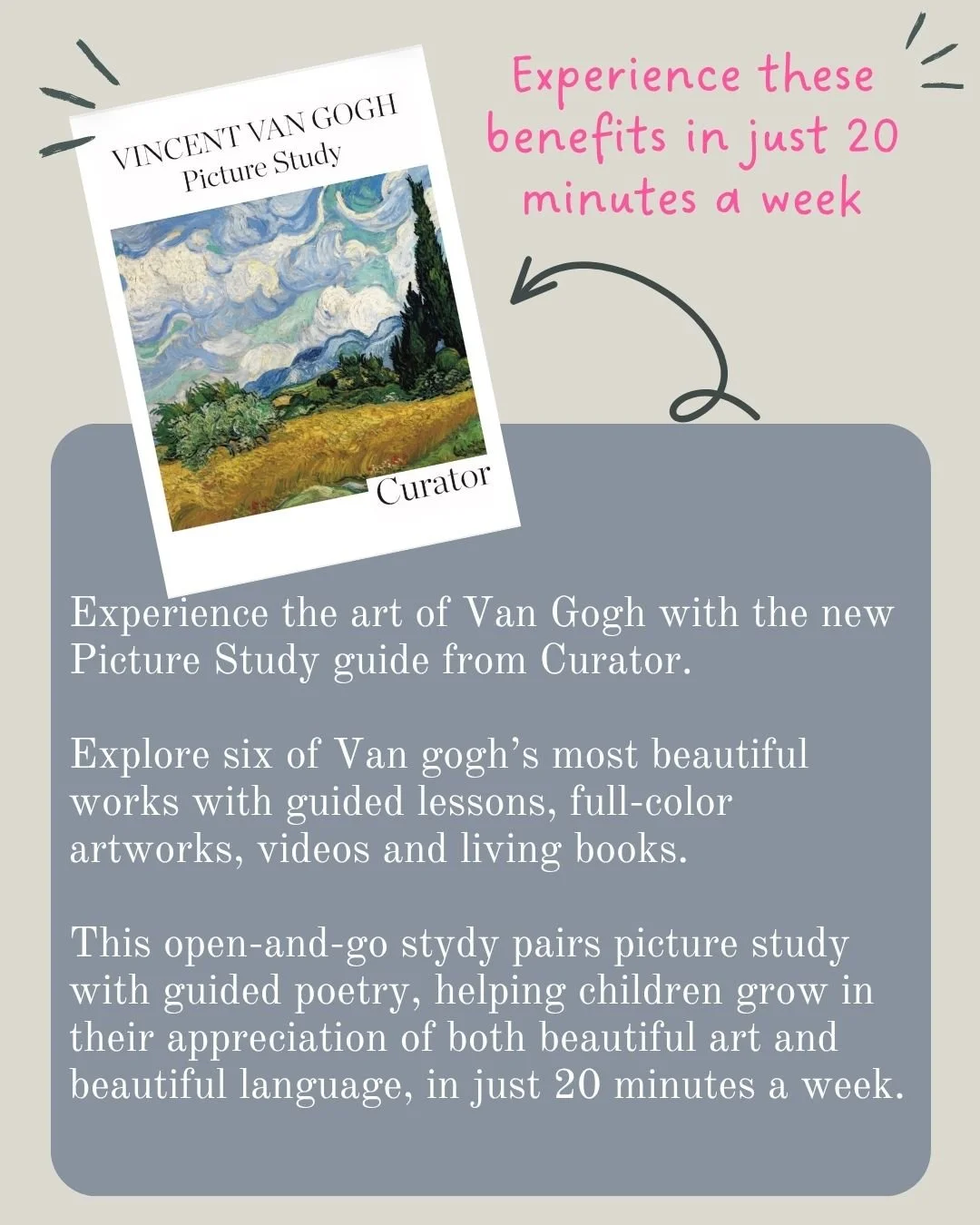
Our Van Gogh Picture Study Guide was designed to make this easy for you. Each lesson is fully prepared, open-and-go, and takes just 20 minutes a week. You will know exactly what to show, what to ask, and how to guide your child toward deeper observation, without needing to research or plan anything yourself. There are 6 artworks to discover, and we’ve paired each with guided poetry lessons to explore the themes and ideas.
Picture study is a simple way to bring beautiful art into your lessons while also supporting the kind of cognitive development that benefits every subject your students study. Explore the Van Gogh Picture Study Guide and begin this simple weekly rhythm in your homeschool. Purchase Here