What does a Charlotte Mason day actually look like?
You’ve bought a new curriculum, there’s a shelf full of carefully chosen books you’re eager to read aloud to your children, you’ve filled pots with freshly sharpened pencils, and now you’re sitting at your kitchen table about to plan out your week.
And then comes the question that can suddenly make your empty planner feel a little daunting:
What does a Charlotte Mason homeschool day actually look like?

Creating your day-to-day structure
It is one thing to read about living books, narration, nature study, picture study and short lessons. It is another thing entirely to work out how all those ideas fit together on an ordinary Monday morning.
The good news is that a Charlotte Mason day does not need to be complicated.
It does, however, benefit from being crafted with purpose.
A good daily rhythm creates enough structure to make room for lessons, read alouds, outdoor time, creativity, rest and the practical work of family life—without trying to squeeze every worthwhile thing into every single day.
Begin with rhythm, not a minute-by-minute schedule
Charlotte Mason famously valued order, habit and regularity, but a well-ordered homeschool does not need to feel rigid.
Resist the temptation to fill every half hour of the day from 8am -3pm with academics, and begin instead by identifying the natural rhythm of the family.
When does everyone have the most energy and attention? When do your children naturally gravitate towards creativity or movement? How long can your children pay attention before they get bored or frustrated?
For many families, focused academic lessons work best during the morning. Afternoons can then provide room for nature study, handcrafts, art, music, reading, outdoor play and the many ordinary things that make up family life.
For other families, it might work best to spend an hour outside in the morning so children can explore and play before sitting down to focused lessons.
A good routine should make sure the things that matter have somewhere to belong. The exact order will naturally change according to the ages of the children, the season of life and the needs of the family.
A simple elementary rhythm might look something like this:
A Sample Day
Morning
Breakfast and morning routines
Bible, Literature & Poetry
Language Arts
Snack break
Math
Outdoor Playtime
Early Afternoon
Living book & narration
History, Geography or Science
Foreign Language
Lunch
Afternoon
Notebooking
Picture study, composer study, handicrafts or nature study
Independent play or reading
Outdoor time
Help with household chores
Free time
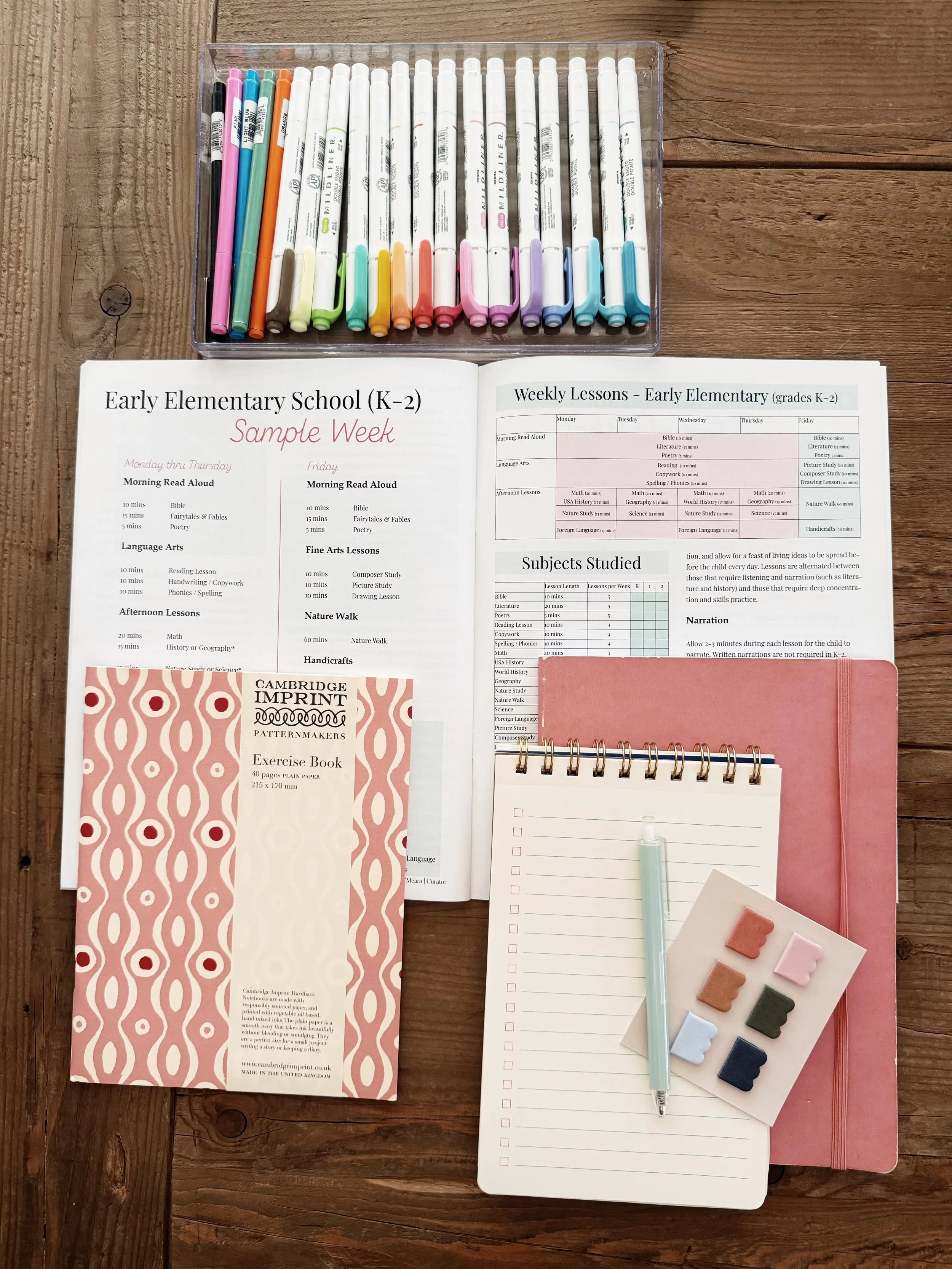
Page from inside “Charlotte Mason - the Lessons”
“A good routine should make sure the things that matter have somewhere to belong. ”
Build the day around what matters most
One of the easiest mistakes in homeschool planning is to begin with a long list of subjects and try to find a place for every one of them. Instead, begin by asking:
What kind of education and childhood am I trying to create for my family?
Of course there will be daily math lessons, reading instruction and written work.
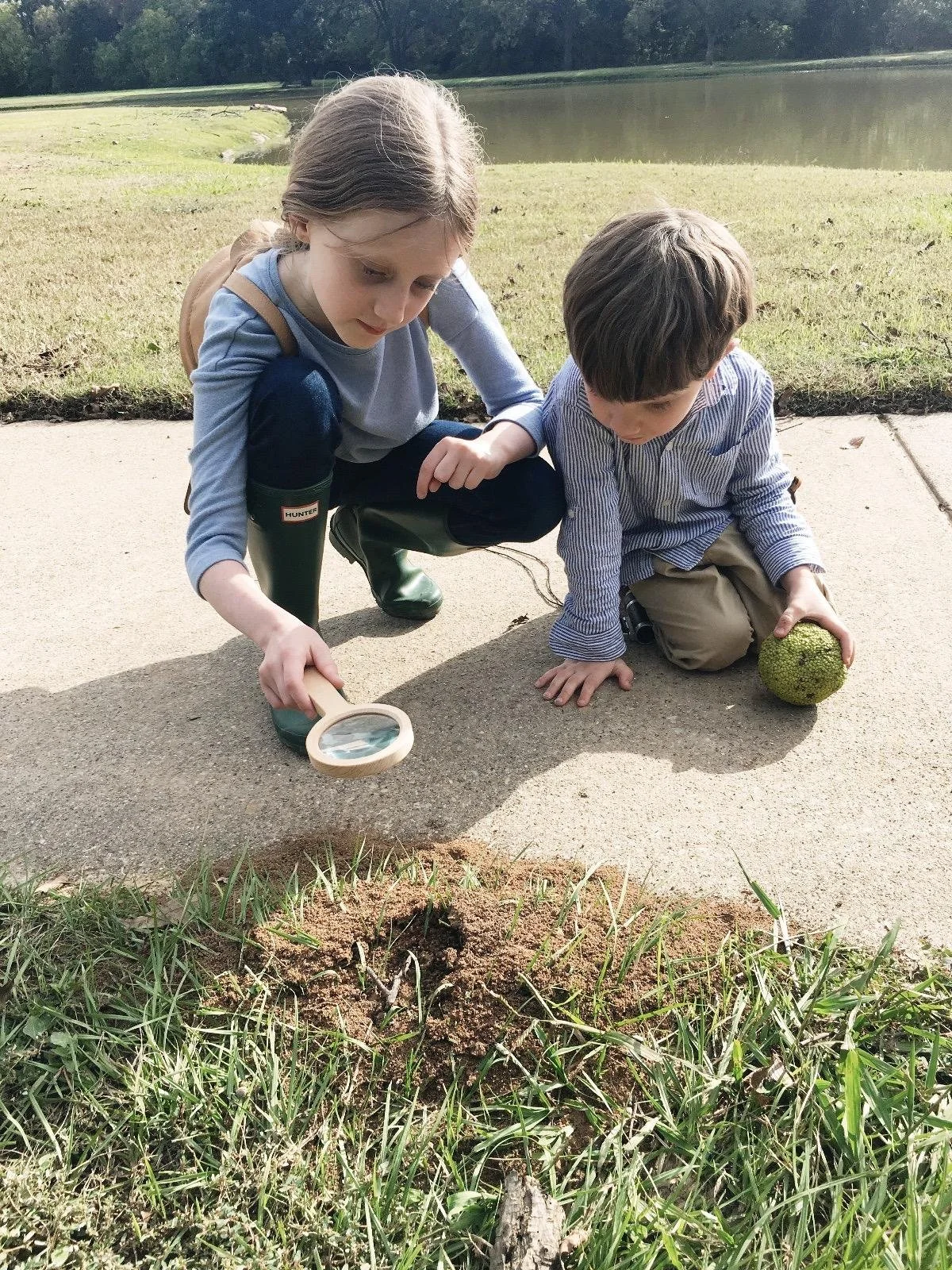
But a rich education also includes the hour spent reading a wonderful living book aloud on a blanket in the garden, an afternoon nature walk stopping to explore animal tracks and gathering leaves, or a child quietly drawing at the table.
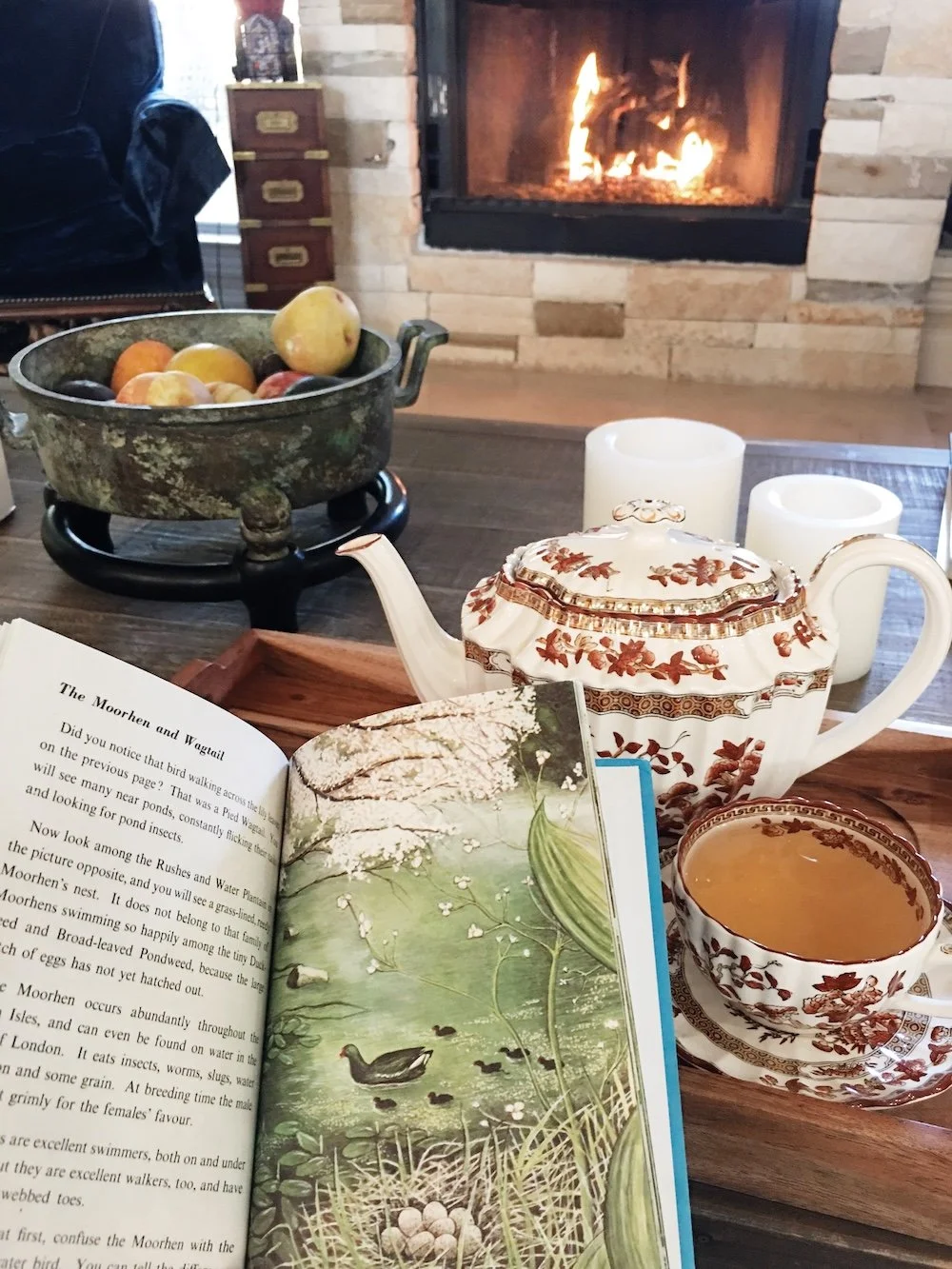
There is time for a weekly picture study looking at beautiful art, reading aloud poetry read over tea, practicing an instrument, making things by hand, building forts and running around in the garden.
These experiences are not extras to be added once the “real schoolwork” has been completed; rather, they are an essential part of a child’s education and childhood.
When you are planning your homeschool, choose a few enriching anchor points around which the week is shaped.
Perhaps the family wants to protect time for:
daily read-alouds from living books
outdoor time every afternoon
nature study once a week
picture study once a week
poetry or music each week
handicrafts or creative work
plenty of unstructured time for play and independent interests
Once those priorities are visible, it becomes much easier to build a week that actually reflects them.
Not every subject needs to happen every day
This is often one of the most freeing discoveries for a parent trying to plan a Charlotte Mason education.
A child does not need to study geography, history, science, nature study, picture study, music, poetry and handcrafts every single day. Some subjects form part of the daily rhythm and others are spread across the week.
An elementary week might include:
Daily:
Math
Language Arts
Living Books (fairytales, fables, biography)
Narration
Notebooking / written work
Outdoor time
Weekly:
Monday: Composer Study, History Lesson
Tuesday: Picture Study, Geography
Wednesday: Handicrafts, Science Lesson
Thursday: Drawing / Music Lesson
Friday: Nature study
The exact subjects will differ by age, but the principle remains the same: rather than trying to do everything every day, give each worthwhile subject a regular place in the week.
“The goal is not to keep a child at the desk for as long as possible. The goal for the child to be engrossed with lively attention and interest and eager to do his lessons.”
Keep lessons short and attention strong
A Charlotte Mason day can contain a surprisingly broad education because lessons are intentionally kept short.
The goal is not to keep a child at the desk for as long as possible. The goal for the child to be engrossed with lively attention and interest and eager to do his lessons, which are short, focused and centered on living books and narration.
A younger child may spend only a short period of concentrated time on one lesson before moving to something different. Changing from numbers to a story, from writing to geography, or from focused lessons to time outdoors gives the mind variety while cultivating the habit of attention.
Short lessons also help prevent the school day from slowly expanding until it consumes the entire day. When lessons are completed by the afternoon, there should still be time to climb trees, build forts, draw, read, make things, pursue interests and simply be a child.

“Children need periods of time in which nothing has been scheduled for them, ”
Plan breathing room
A carefully crafted homeschool day needs empty spaces just as much as it needs planned ones. Children need periods of time in which nothing has been scheduled for them, giving them room for imaginative play, reading, creating, resting and following their own ideas. These unstructured stretches are not wasted time; they are an important part of a healthy and sustainable daily rhythm.
Parents need breathing room too. A routine that moves directly from lessons to lunch, errands, activities and dinner, with no margin anywhere in between, may look beautifully productive on paper but can quickly become exhausting in real life.
It is far better to deliberately build cushions into the day: allow the morning lessons to come to a definite end, let lunch be followed by a quieter hour, and protect stretches of the afternoon in which children can play while the parent reads, works, prepares dinner or simply gathers some energy for the remainder of the day.
Rest does not need to be earned only after everything else has been accomplished. When it is intentionally woven into the rhythm of the day, it helps create a homeschool life that feels calmer, more spacious and far easier to sustain.
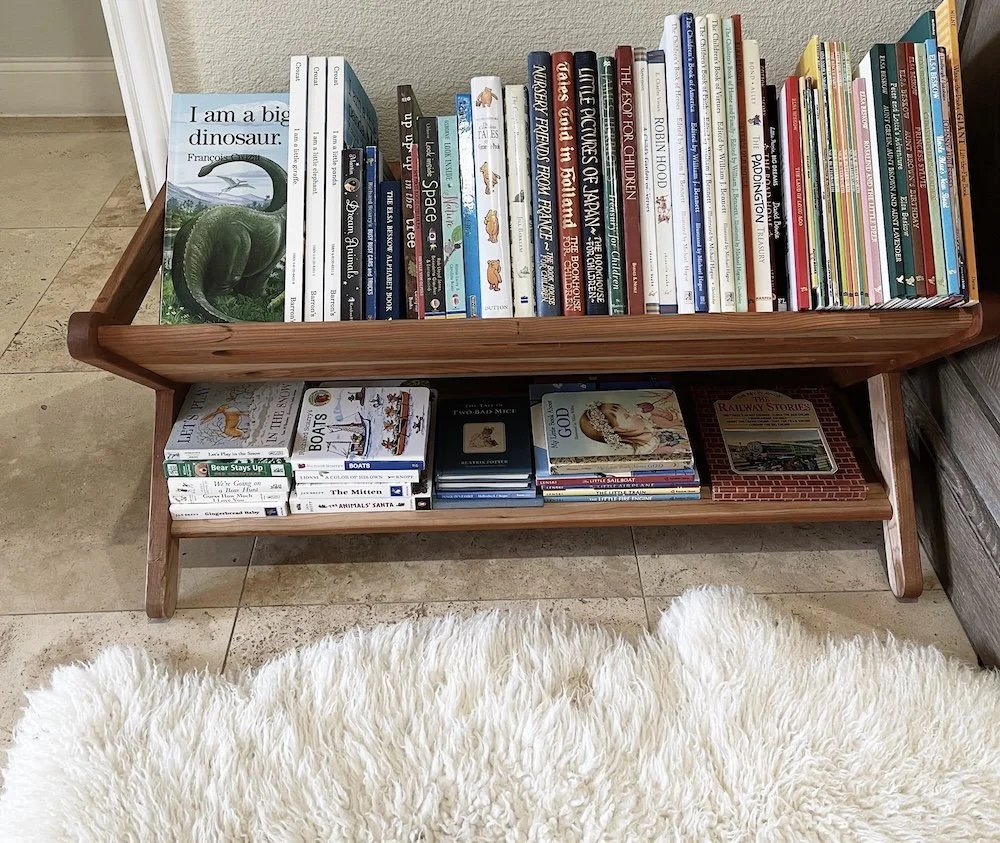
Make room for the practical work of home
Homeschool does not happen separately from real life. There will still be laundry to wash, meals to prepare, dishes to put away, appointments to attend and floors that somehow need sweeping again.
Trying to ignore those things while planning a beautiful homeschool routine usually results in one of two things: the household work continually interrupts lessons, or it piles up until everything begins to feel overwhelming.
When you plan your day, try giving household chores their own predictable places in the day, and children can help in this work according to their ages and abilities.
A simple rhythm might include:
Morning: beds, breakfast dishes, laundry started
Afternoon: lunch clean-up and a quick household reset
Evening: dinner, dishes, laundry and a final tidy
Creating order in this way will ensure that the practical work of keeping a home does not continually compete with the meaningful work of educating your children.
Guard the hours you have carefully crafted
“A good routine organizes the day and creates boundaries around the things your family has decided matter most.”
A good routine organizes the day and creates boundaries around the things your family has decided matter most. Once you’ve created a rhythm that works, it is worth protecting. Your homeschool day needs enough consistency to become familiar and sustainable. Appointments, errands, activities and everyday interruptions can quickly fragment the week until the homeschool routine that looked so good on paper easily falls apart in real life.
Where possible, it helps to group errands together, schedule appointments for times that cause the least disruption, and keep certain parts of the week protected. Having a clear rhythm in place also makes it easier to decide which opportunities genuinely add something meaningful to family life and which simply make an already full week busier.
Morning hours might be reserved for lessons, while afternoons remain open for nature walks, creative work, reading or simply being at home. You might reserve one afternoon a month for doctor visits and dental appointments, and one afternoon a week for errands.
There is no single perfect Charlotte Mason schedule
Perhaps the most important thing to remember is that there is no single timetable that every Charlotte Mason family is supposed to copy. A routine that works beautifully with one kindergarten child will naturally look very different a few years later with several children spanning elementary, middle and high school. Seasons change, children grow, interests develop and academic needs become more demanding, so a good homeschool rhythm should be revisited and reshaped as the family changes.
The shape of the day also changes as children mature. In the early years, a generous portion of the homeschool day may be spent gathered together for read-alouds, short lessons and shared activities. As children become older and more independent, some of that shared time naturally gives way to longer stretches of independent work: reading their own living books, completing notebooking pages, working on projects, researching topics of interest or managing increasingly substantial academic assignments. The parent’s role gradually shifts too, from directing much of the day to helping the older child develop the habits and independence needed to take greater responsibility for their own education.
What remains constant is the purpose behind the routine: to create enough structure for rich learning, meaningful work, rest, beauty, outdoor time and family life to coexist.
Each year you are building a rhythm that serves the children and the season they are in now. When Monday morning arrives, the books are ready, the planner is open, and everyone knows where to begin.
Ready to turn these ideas into an actual homeschool plan?
Explore our best-selling guide, Charlotte Mason: The Lessons which was created to help families turn Charlotte Mason’s principles into a practical daily and weekly rhythm that works in real life.
Inside, you’ll find detailed daily rhythms, weekly plans and subject-by-subject guidance from kindergarten through high school, helping answer the questions that so often arise when you sit down with a stack of books and an empty planner:
What should a Charlotte Mason day actually look like?
Which subjects should be taught each day?
How long should lessons be?
How do you fit everything into the week without feeling overwhelmed?
How should the rhythm change as children grow?
How do you make room for books, nature, creativity and rest?
Charlotte Mason — The Lessons is designed to take you from knowing what you want your homeschool to feel like to confidently knowing what to do when Monday morning arrives.

PRINTED GUIDE, 60 pages, full color
Create beautiful and enriching educational experiences for your students with this comprehensive guide to modern Charlotte Mason lessons! Inside you’ll find practical ideas, step-by-step guidance, resources, and inspiration to start easily implementing a Charlotte Mason education. Designed for educators in school and home settings.
Enjoy a user-friendly guide to Charlotte Mason: Discover how you can create successful and engaging lessons with this practical and easy-to-follow guide. Packed with book recommendations and detailed guidelines on teaching all the main subjects in a Charlotte Mason education for grades K-12!
Create a rich and joyful education: Learn how to easily create lessons that foster delight in learning, inspire creativity, lively discussion and critical thinking, and that develop a lifelong appreciation for beauty and meaning while building excellent written and verbal skills and a wide vocabulary.
What’s Inside…36 detailed chapters, including: the Charlotte Mason approach to language Arts, pre-reading, beginning reading, copywork, prepared dictation, poetry, fairytales and fables, Shakespeare, nature study, nature journaling, nature walks, picture study, living science lessons, Charlotte Mason math lessons, geography, history, foreign languages, bible study and handicrafts. Also includes sample weekly schedules for grades K-12.
Grab a cup of coffee… We wanted to make a guide to Charlotte Mason lessons that was tangible, beautiful and luxurious, that you could hold in your hands, flip through and enjoy reading with a cup of coffee, and refer to again and again. You’ll receive a 60-page, full color, perfect-bound guide that will be shipped directly to you. There is also a digital download of this guide available for purchase if you would prefer (see listing under DIGITAL GUIDES)
An enriching education for everyone… this guide is designed for teachers in public and private schools, homeschool families and co-ops. Written to include faith-based as well as secular schools and families.
Ships Worldwide.